
removals since 1950


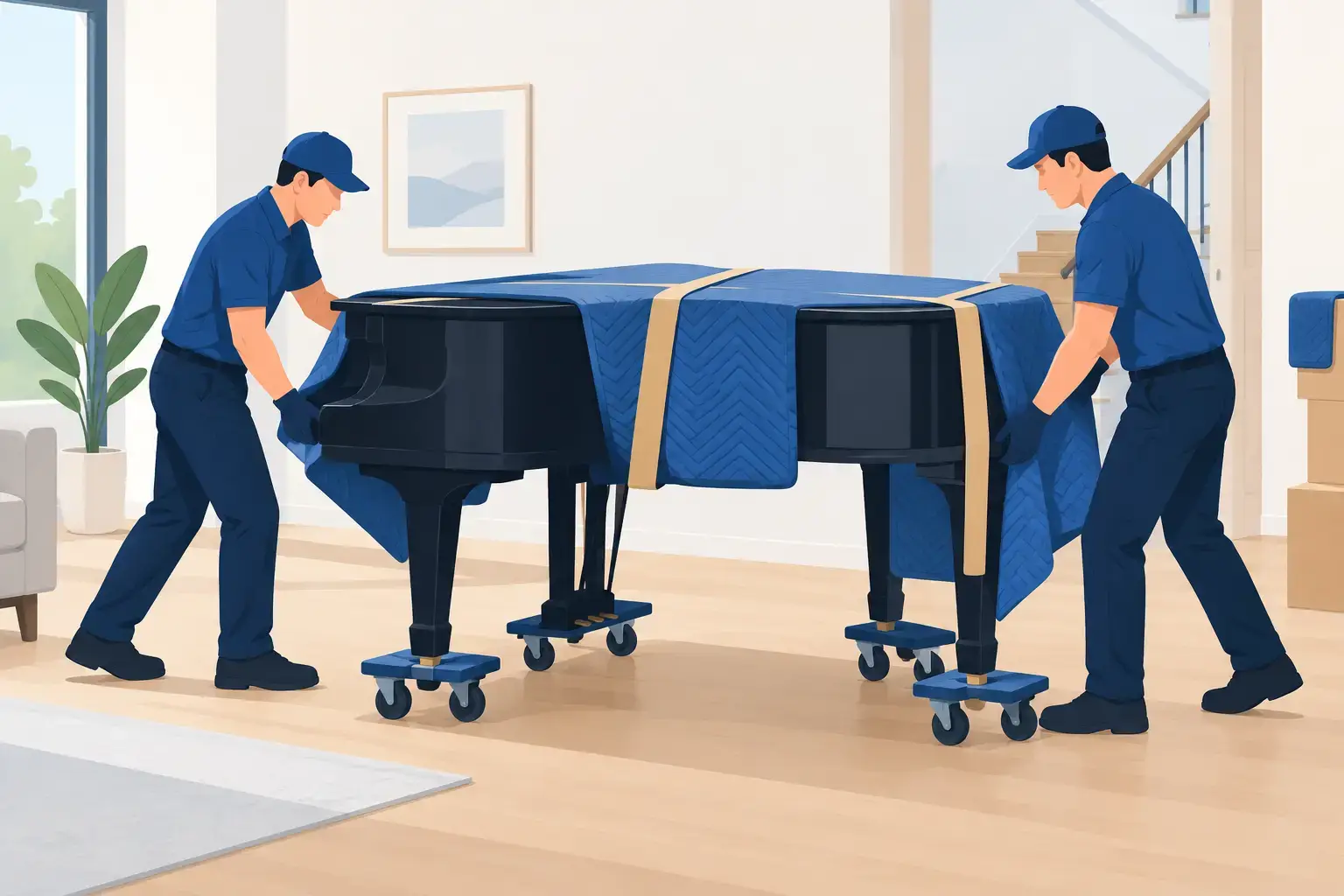
A piano is rarely just another item of furniture. It is heavy, finely balanced and often holds years of family memories, whether it is an upright in the sitting room or a baby grand that has been part of a home for generations. Professional piano removals are designed to protect the instrument, the people moving it and the property at both ends of the journey.
Moving a piano safely calls for more than strength. It takes careful planning, the right protective equipment, trained handling and a suitable vehicle. A rushed attempt with a few friends can lead to damaged keys, a marked staircase, injury or far more serious harm to the piano’s internal mechanism.
Why piano removals need specialist planning
Pianos are deceptively complicated to move. An upright piano may look compact, but it can weigh anywhere from around 180kg to more than 300kg. Grand pianos are larger, more awkwardly shaped and may weigh considerably more. Much of that weight is concentrated in the cast-iron frame, which means the instrument does not behave like an ordinary cabinet when it is lifted or tilted.
The exterior also needs protection. Polished wood, veneers, pedals, legs and lids are vulnerable to knocks and pressure. Inside, thousands of moving components work together under high string tension. While a well-handled move should not damage the action or frame, poor handling can create problems that are not immediately visible.
Access is usually the deciding factor. Before the move, a professional team will need to consider the width of doorways, turns on staircases, the number of steps, parking arrangements and the route from the room to the vehicle. A piano on the ground floor with clear access requires a very different plan from one in a top-floor flat, a narrow Victorian terrace or a property with gravel paths and steep steps.
What a professional piano removal involves
A reliable removal company begins by gathering the right information. The type of piano matters: an upright, piano stool and digital piano can normally be moved differently from a baby grand, boudoir grand or concert grand. Photographs and accurate measurements can help the team assess access before moving day, particularly where space is tight.
On the day, trained movers protect the piano with purpose-made padded covers and securing materials. They use suitable handling equipment to support the weight and control the instrument rather than dragging it across floors or relying on its small castors. Piano castors are intended for positioning a piano within a room, not for travelling over thresholds, patios, driveways or ramps.
The instrument is then secured within the vehicle so it cannot shift during transport. A specialist lorry with air-cushioned suspension is especially valuable for reducing road vibration, while GPS-tracked transport provides greater visibility during longer journeys. The aim is simple: the piano should arrive in the same condition in which it left.
Upright piano removals
An upright piano is usually the most straightforward type to move, but it still deserves careful handling. Its shape can make it easier to negotiate standard doorways than a grand piano, although its weight and high centre of gravity remain significant risks.
The team will normally protect the casework, secure moving parts where appropriate and use a controlled lifting method through the property. If stairs are involved, the route must be assessed in advance. It is not safe to assume that a piano can be carried up or down a staircase simply because other large furniture has fitted.
Grand piano removals
Grand piano removals require more preparation. Depending on the model and access, the legs, pedal lyre and lid may need to be removed and wrapped separately. The piano body is placed on a specialist board or skid for safe support and movement, with every component carefully protected for transport.
This work should only be undertaken by experienced handlers. The legs on a grand piano are not designed to support sideways pressure during a move, and incorrect lifting can damage both the instrument and the people involved. At the destination, the piano is reassembled carefully and positioned where the customer wants it.
Preparing your piano and property before moving day
There are a few practical steps that make a real difference. First, clear ornaments, sheet music, lamps and loose items from on or around the piano. Close and lock the keyboard lid if it has a lock, but avoid taping directly onto polished surfaces. If you have removable music stands or accessories, let the removal team know so they can pack them appropriately.
It also helps to clear the route through the property. Move smaller furniture, rugs and trip hazards where possible, and make sure children and pets are kept away from the working area. If parking is restricted outside your home, arranging suitable access in advance can prevent unnecessary delays and reduce the distance the piano must be moved by hand.
Tell the removal company about anything that may affect the job. This includes low ceilings, narrow turns, exterior steps, lifts, shared hallways, restricted parking and properties with difficult access. Honest detail at the quotation stage helps the crew arrive with the correct number of trained movers, equipment and vehicle capacity.
Should a piano be tuned after a move?
Most acoustic pianos benefit from tuning after relocation, but not immediately. Changes in temperature and humidity can affect the strings and wooden components, particularly when moving between properties with very different conditions. Allowing the piano to settle in its new room for a few weeks before arranging a tuner is usually sensible.
A professional removal should not be viewed as a substitute for tuning, nor should a piano going slightly out of tune mean the move has been mishandled. Seasonal changes alone can affect tuning. However, if the instrument has obvious damage, a sticking action or unusual noises after a move, seek advice from a qualified piano technician.
Piano storage between moves
Sometimes a piano needs to leave one property before it can be delivered to the next. This may happen during a house sale, renovation, overseas relocation or a temporary move into rented accommodation. In these cases, secure containerised storage can keep the instrument protected until delivery is arranged.
The storage environment matters. Pianos should be kept dry, secure and away from extremes of temperature or damp conditions. A carefully managed collection, storage and redelivery service also avoids the risk of the piano being moved repeatedly by different parties.
For customers moving locally, across the UK or further afield, using one experienced provider for collection, transport and storage can make the process much easier to manage. George Bird Removals & Storage has been helping customers move valuable and difficult items since 1950, with trained crews and specialist transport for moves that need extra care.
When a piano removal needs extra support
Not every piano can be taken out through the front door. Tight access, multiple flights of stairs and unusual property layouts sometimes require additional equipment or a different lifting approach. This is not a reason to take chances. It is a reason to have the move properly assessed before committing to a date.
The same applies to international removals. Export packing, customs paperwork, shipping arrangements and delivery access all need to be coordinated around the piano’s size, value and destination. A suitable removal plan protects the instrument at every stage, rather than treating it as an afterthought within a larger household shipment.
A piano deserves a measured move, not a hurried one. Share clear photographs and access details when requesting a quote, ask how the instrument will be protected and make sure the team has experience with your type of piano. That preparation gives your instrument the best chance of arriving safely, ready to become part of its next home.